


Whether it’s a trip to the vet or a fortnight away, travelling by car with a dog is part of life for most UK owners, but it comes with a legal requirement many people don’t realise exists. Under the Highway Code, your dog must be properly restrained any time you’re driving, and getting this wrong can mean a fine, penalty points, or an invalidated insurance policy. This guide covers what the law actually says, how to choose the right restraint, how to handle car sickness and nervous first journeys, and what’s worth packing so the trip is comfortable for everyone.
Is it illegal to travel with a dog unrestrained in the UK?
Yes, in effect. Rule 57 of the Highway Code requires that dogs and other animals travelling in a vehicle are suitably restrained so they can’t distract the driver or be hurt if the car stops suddenly. It doesn’t specify one single product, but it does set out what counts as acceptable, and it applies every time you drive, not just on longer trips.
What counts as “suitably restrained”?
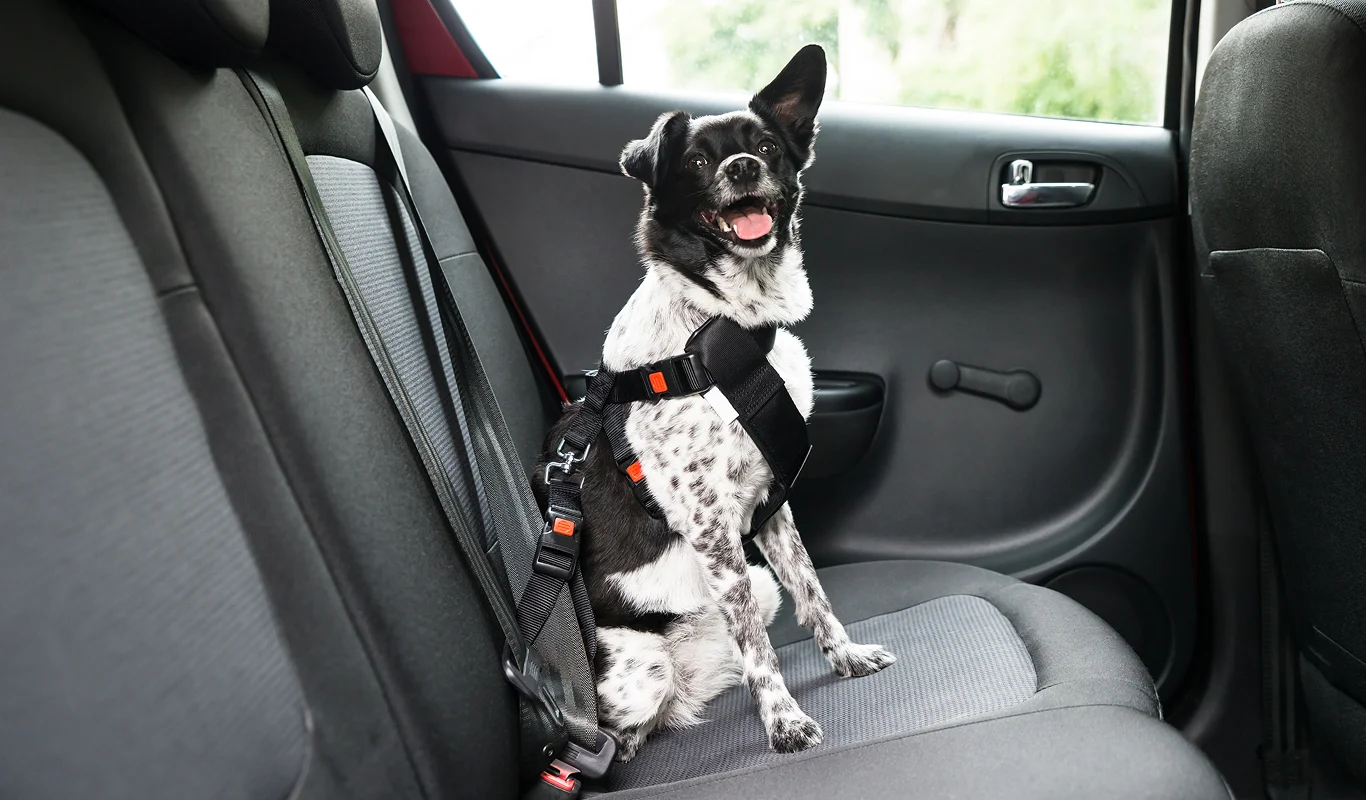
The Highway Code accepts four main options: a seat belt harness, a pet carrier, a dog crate or cage, and a dog guard fitted between the boot and the passenger area. Any of these is acceptable provided it’s properly fitted and the right size for your dog. A dog loose on the back seat, or simply clipped to an ordinary lead, doesn’t meet the standard.
What happens if you don’t restrain your dog?
An unrestrained dog can be treated as a driving distraction, which opens the door to a careless driving charge. Penalties can range from an on-the-spot fine up to a maximum court fine of £5,000 and up to 9 penalty points if the case goes to court, and if you’re involved in an accident with an unrestrained dog, your insurer may treat it as a reason to reduce or reject a claim. It’s worth checking your own car and pet insurance policies, since some are specific about the restraint they expect you to use.
Choosing the right restraint for your dog
The best restraint depends on your dog’s size, temperament and your car’s layout. A large, calm dog in an estate car often does well with a travel crate, like the Henry Wag Canvas Pet Crate, which folds flat when it’s not needed. For dogs that travel on the back seat, a proper travel safety harness paired with a seat belt restraint keeps them securely in place without restricting them completely.
Smaller dogs are often better suited to a secured carrier, such as the Catit & Dogit Voyageur, which works for car, train or air travel. Whichever you choose, it’s worth adding a car protection mat or seat cover too, since muddy paws and wet fur are far easier to deal with than a ruined interior.
Getting your dog used to car travel
Puppies and nervous dogs benefit from a slow, positive introduction to the car rather than being thrown straight into a long journey. Start by sitting in the parked car together with no engine running, then progress to very short trips somewhere enjoyable, like a local park, rather than always ending at the vet.
Build up the length of journeys gradually, and use treats and calm praise to build a positive association. If your dog is nervous around loud noises or unfamiliar situations more generally, the same gradual, low-pressure approach applies, so it’s worth being patient rather than rushing the process.
Dealing with car sickness
Car sickness is common, particularly in puppies, and it’s usually caused by the inner ear’s balance signals conflicting with what your dog can see and feel. Many dogs improve naturally as they mature and get more used to travelling, though some need extra help along the way.
A few things tend to help can be avoiding feeding your dog for a couple of hours before travelling, keeping the car well ventilated with a window cracked slightly, and letting them travel facing forward rather than looking out of a side window, since watching the scenery blur past can make sickness worse. Drive smoothly and take corners gently where you can. PDSA guidance also recommends short, positive practice trips to rebuild your dog’s confidence if they’ve become anxious about travelling as a result of previous sickness. If symptoms persist, it’s worth speaking to your vet, since anti-sickness medication is available for more difficult cases.
Keeping your dog comfortable and hydrated
On longer journeys, aim for a break every two to four hours so your dog can stretch their legs, go to the toilet and have a drink. A non-spill travel bowl, like the Road Refresher Bowl, means they can have access to water throughout the journey without it slopping everywhere on the move.
Never leave a dog alone in a car, even briefly and even with a window open, since the temperature inside a vehicle can climb to dangerous levels within minutes, according to PDSA safety guidance. This applies on mild days too, not just in obvious summer heat.

Packing checklist for a car journey with your dog
A quick checklist for anything beyond a short trip:
- A properly fitted restraint, whether that’s a harness and seat belt, crate or carrier
- Water and a non-spill travel bowl
- Poo bags and a spare lead
- A blanket or familiar bed for comfort
- A favourite toy or chew to help pass the time
- Calming support, such as Calm-eze Tablets, if your dog gets anxious while travelling
FAQs
How often should I stop when travelling with a dog?
Aim for a break every two to four hours on longer journeys, giving your dog the chance to stretch, toilet and drink water.
How do I stop my dog getting travel sick?
Avoid feeding shortly before travel, keep the car ventilated, let your dog face forward, and build up journey length gradually if they’re anxious. Speak to your vet if sickness continues.
Enjoy the journey
Getting the restraint right isn’t just about staying on the right side of the law, it also makes journeys calmer and safer for everyone in the car. With the right kit and a bit of patience for nervous travellers, most dogs settle into car journeys just fine. If you’re not sure what restraint suits your dog and your car, our team is happy to help you choose.