


If you’ve searched is salmon oil good for dogs, you’ve probably seen plenty of glowing reviews from brands that sell it. The short answer is genuinely yes for most dogs, but the fuller picture matters more than a quick yes or no. Salmon oil is one of the most common ways UK owners add omega-3 fatty acids to their dog’s diet, supporting everything from coat condition to joint comfort. It isn’t automatically right for every dog, though, and getting the dose wrong can cause problems of its own. This guide walks through what salmon oil actually does, how much to give, the side effects to watch for, and how to work it into your dog’s routine safely.
Is Salmon Oil Good for Dogs? The Short Answer
Yes, salmon oil is safe and beneficial for most dogs. It’s a natural source of omega-3 fatty acids, EPA and DHA, that support skin, coat, joints, heart, and brain health. The caveat is dosage: too much causes side effects, and a small number of dogs shouldn’t have it at all without veterinary guidance first.
Newcastle Pets stocks a Salmon Oil supplement designed to be mixed straight into a dog’s daily meal. Because potency and recommended serving size vary between products, always follow the dosing guidance printed on the specific bottle you’re using rather than a generic figure from the internet.

Why Salmon Oil Works: The Science Behind Omega-3
Salmon oil is rich in two long-chain omega-3 fatty acids, EPA and DHA, which dogs can’t produce in meaningful amounts on their own. These fatty acids get built into cell membranes throughout the body, where they help regulate inflammation and support normal function in the skin, joints, heart, and brain.
This is different from plant-based omega-3 sources like flaxseed or linseed oil, which contain a shorter-chain fatty acid called ALA. Dogs convert ALA to EPA and DHA very inefficiently, so a dog relying on plant oils alone would need a lot more of it to get a similar benefit. Marine sources like salmon oil deliver EPA and DHA directly, which is why vets tend to favour fish-based supplements over plant oils when omega-3 supplementation is genuinely needed according to Improve International.
Key Benefits of Salmon Oil for Dogs
Skin and coat condition
Salmon oil is most commonly given for skin and coat health. Omega-3s help strengthen the skin’s natural barrier, which can reduce dryness, itching, and excessive shedding, and give the coat a noticeably glossier finish after several weeks of consistent use.
This makes it a popular choice for breeds prone to dry or sensitive skin, though any dog can benefit if their coat looks dull or their skin seems flaky.
Joint mobility and inflammation
Omega-3s have an anti-inflammatory effect that can ease stiffness and support mobility, particularly in older dogs or those with osteoarthritis. The clinical evidence for this is strongest when fish oil is part of a properly balanced diet rather than used as a standalone fix.
If joint support is your main reason for considering salmon oil, it’s worth looking at the wider picture too. Our guide to the best joint supplements for dogs covers the other options available. Chews such as VETIQ Joint Care Supplement Chews combine salmon oil with glucosamine and green lipped mussel in one product, which some owners find easier to dose than a liquid oil.
Brain function and cognitive support
DHA plays a structural role in brain tissue, which is why it’s often recommended for puppies during development and for senior dogs as a way to support ongoing cognitive function.
For puppies, adequate DHA intake during the growth phase supports normal brain and eye development. For older dogs, maintaining omega-3 intake is one of several factors that can help support alertness and general wellbeing as they age.
Heart and immune health
Omega-3s help manage cholesterol and triglyceride levels and support a healthy inflammatory response, both of which contribute to good cardiovascular health and a more resilient immune system over time.
These benefits tend to build gradually with consistent, correctly dosed use rather than appearing overnight.

How Much Salmon Oil Should You Give Your Dog?
There’s no single dose that suits every dog, but a common maintenance guideline used by vets is around 40mg of EPA and 25 to 30mg of DHA per kilogram of body weight per day. Always start low and follow the specific dosing instructions on your product’s label, since concentration varies significantly between brands.
Higher, “therapeutic” doses are sometimes used under veterinary supervision for specific conditions such as arthritis, but these should only be given with your vet’s guidance [Source: Improve International]. Introduce any new oil gradually over a week or so to let your dog’s digestion adjust, rather than starting at a full dose straight away.
To put that maintenance guideline into perspective, a 20kg dog would work out to roughly 800mg of EPA and 500 to 600mg of DHA a day. Most bottles state their EPA and DHA content per millilitre or pump, so you can use that figure alongside your dog’s weight to check the label’s suggested serving lines up with general veterinary guidance, rather than just going by a generic “teaspoons per size of dog” chart.
Are There Any Side Effects or Risks?
Yes, salmon oil can cause side effects if you give too much. The most common is loose stools or diarrhoea, since the oil acts as a natural lubricant in the gut. Weight gain is another risk, as salmon oil is calorie-dense.
A rarer but more serious risk is pancreatitis, especially in dogs already prone to it, since fish oil is high in fat. WebMD Pets says if your dog shows vomiting, lethargy, or abdominal pain after starting a fatty supplement, stop giving it and speak to your vet. It’s worth mentioning any supplement use, including salmon oil, to your vet if your dog is on medication, has a bleeding disorder, or has an existing health condition, and our dog healthcare range is a good place to start if you’re building out a wider wellbeing routine alongside it.
How to Give Your Dog Salmon Oil
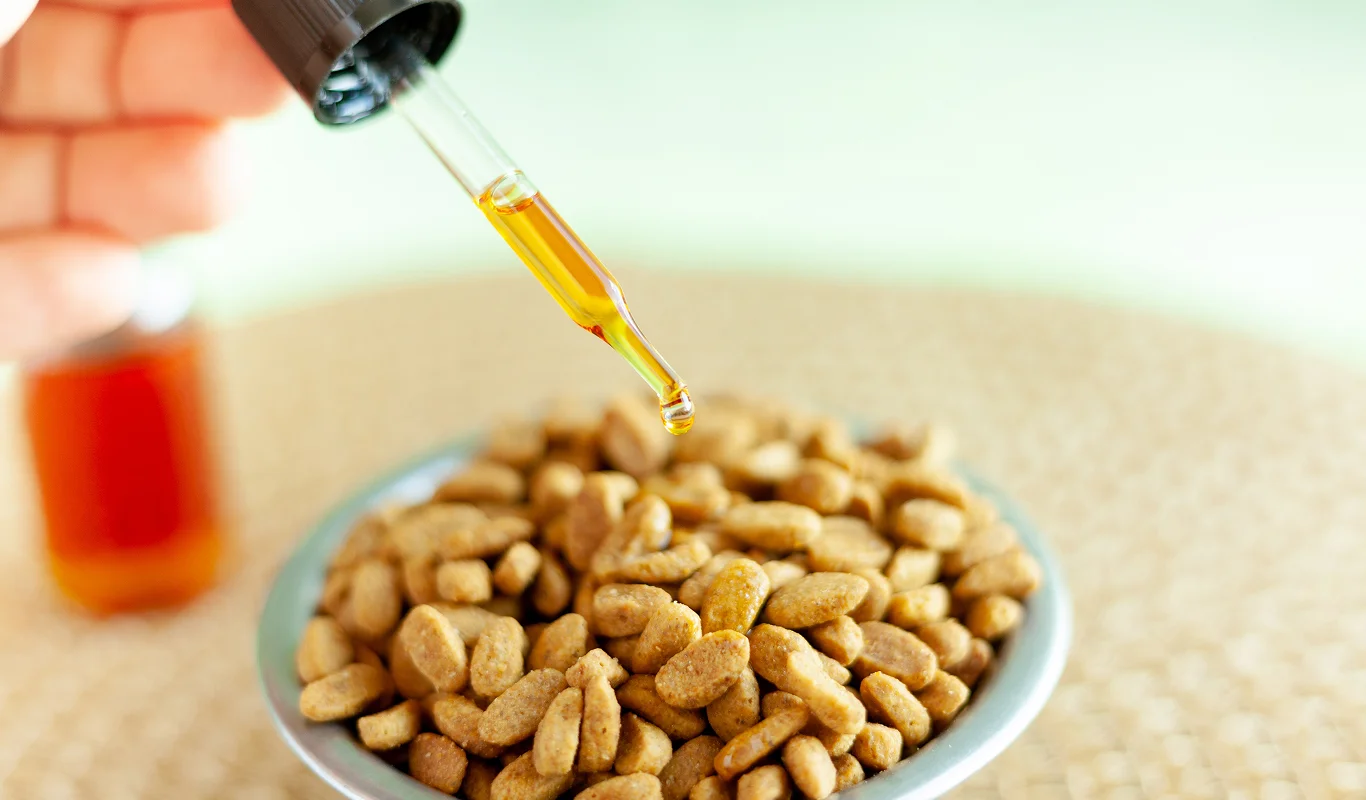
The simplest method is pouring or pumping the oil straight onto your dog’s usual food at mealtime. Most dogs take to the taste readily, since salmon oil has a strong, fishy flavour that many find appealing rather than off-putting.
Salmon oil oxidises and turns rancid faster than most cooking oils, so store it in a cool, dark place and keep the cap tightly closed between uses. Many owners find keeping it in the fridge extends its usable life, particularly once opened. If the oil starts to smell noticeably stronger or “off” compared to when you first opened it, it’s best to replace it rather than keep using it, as rancid oil loses much of its nutritional value and can cause stomach upset.
Is Salmon Oil Better Than Other Oils?
Salmon oil generally outperforms other oils commonly given to dogs. Compared with cod liver oil, it avoids the risk of vitamin A and D overdose that comes with regular cod liver oil use. Compared with plant oils like flaxseed, it delivers active EPA and DHA directly rather than relying on the inefficient conversion process dogs use to turn plant-based ALA into a usable form.
That doesn’t make other oils useless, but if omega-3 is the specific goal, a marine source like salmon oil is the more direct route.
Getting Omega-3 Into Your Dog’s Diet
A dedicated salmon oil supplement is the most direct way to add omega-3 to your dog’s routine, but it isn’t the only option. Salmon-based dog food and fish treats can also make a meaningful contribution, particularly for dogs who are fussy about oils mixed into their bowl.
Our Salmon Oil supplement is designed to be poured or pumped straight onto your dog’s usual food. If you’d rather build omega-3 into mealtime itself, Natures Deli Adult Salmon & White Fish uses salmon as a primary ingredient. For treat time, Fish4Dogs Sea Jerky Fish Knots and Natural Wolf Fish Bars are both naturally rich in omega-3 without needing to be dosed separately. For a broader look at how ingredients like these fit into a balanced diet, see our guide to the best dog food in the UK.
When to Talk to Your Vet First
Most healthy dogs tolerate salmon oil well, but it’s worth checking with your vet before starting if your dog is pregnant, has a bleeding disorder, or is already eating a therapeutic diet that contains added fatty acids.
Dogs on certain medications may also need their dose adjusted, since omega-3s can interact with treatments for clotting or inflammation [Source: WebMD Pets]. A quick check with your vet costs nothing and takes the guesswork out of getting started safely.
Salmon Oil FAQs
Can puppies have salmon oil?
Yes, salmon oil is commonly given to puppies to support healthy brain and eye development, though it’s worth checking the product is suitable for puppies and following age-appropriate dosing on the label.
Can salmon oil help with allergies?
It can help manage the itching and skin irritation that often comes with allergies, since omega-3s support the skin barrier, though it won’t address the underlying cause of the allergy itself.
How long does salmon oil take to work?
Most owners notice improvements in coat condition within four to six weeks of consistent use. Benefits for joints and skin allergies can take a little longer to become noticeable.
Final Thoughts
Salmon oil is a genuinely useful supplement for most dogs, not a wonder cure, but a solid, evidence-backed way to support skin, joints, heart, and brain health when dosed correctly. Start low, follow your product’s label, and keep an eye on how your dog responds. Browse our Salmon Oil supplement to get started.