

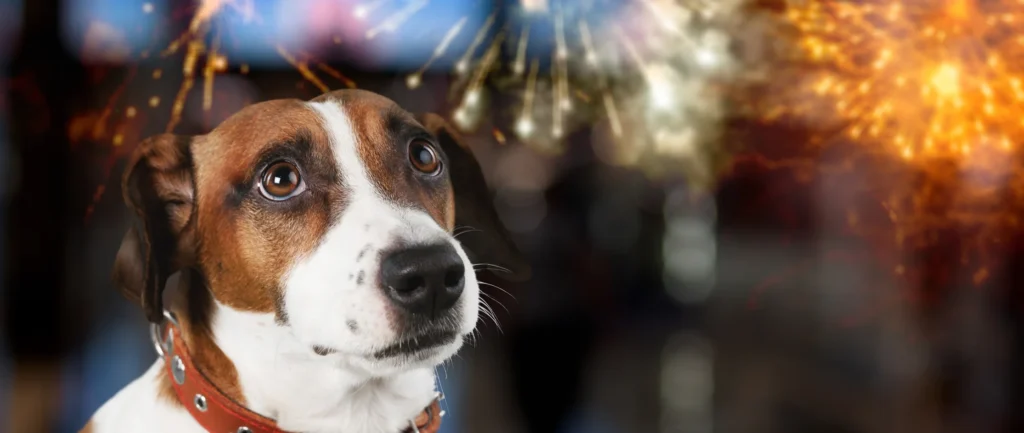
If your dog trembles, hides or paces the moment the first bang goes off, you’re not alone. Working out how to calm a dog scared of fireworks is one of the most common challenges UK owners face every autumn, and it tends to peak around Bonfire Night and New Year. The good news is that a fear of fireworks is manageable, whether you’re starting weeks in advance or just need to get the next few hours right. This guide covers why fireworks frighten dogs, how to spot the signs, what to do before and during a display, and which calming products genuinely help. We’ll also cover when it’s time to call your vet.
Why are dogs scared of fireworks?
Fireworks trigger fear because they’re loud, unpredictable and impossible for a dog to explain. Sudden bangs and flashes with no clear source trip a dog’s instinctive fight-or-flight response, and because every display sounds slightly different, dogs rarely get the chance to fully adjust to them on their own.
A dog’s hearing is far more sensitive than ours, picking up frequencies and volumes we’d barely notice. What sounds loud to us can be genuinely startling to a dog. Research commissioned by the RSPCA found fireworks to be the most common trigger for fear-related behaviour in dogs, with around 45% showing visible signs of distress when they hear them, according to RSPCA advice on fireworks and pets. Age, breed, personality and past experience all affect how strongly a dog reacts, and a dog startled once is more likely to react again next time.

How can I tell if my dog is scared of fireworks?
Fear shows up differently in every dog, but there are some common signs to watch for including whining or barking, excessive panting or drooling, trembling or shaking, pacing and restlessness, trying to hide, holding their tail down, and in more extreme cases, trying to escape.
Some dogs go quiet and withdrawn rather than vocal, so it’s worth knowing your own dog’s normal behaviour. A sudden change, even a subtle one, is usually the clearest sign something’s wrong.
Preparing weeks before fireworks season
The most effective way to help a dog scared of fireworks is to start weeks before Bonfire Night, not on the night itself. Gradual sound desensitisation, playing recordings of fireworks at a very low volume and slowly building up over time, can genuinely change how your dog responds to the real thing.
Settle your dog in a quiet room where they feel safe, then play firework sounds so quietly you can barely hear them. Pair the sound with treats, play or calm attention so your dog starts to associate it with something positive. Only increase the volume once your dog is relaxed at the current level, and stop immediately if they show any signs of stress. This step-by-step approach mirrors guidance from The Kennel Club, and it works best over several weeks or months, so if fireworks season is approaching, now is the time to start. If your dog’s fear is severe, speak to your vet before you begin. They may refer you to a qualified clinical behaviourist who can build a tailored plan.

What to do on the day fireworks are expected
A little preparation on the day itself makes a real difference. Walk your dog and let them relieve themselves well before dusk, since they may be too anxious to want to go out once the noise starts. Feed them earlier in the evening too, as an anxious dog often won’t eat once fireworks begin.
Check your garden and any exits are secure, and make sure your dog’s microchip details are up to date in case they bolt. Close curtains and windows ahead of time to muffle sound and block flashes, and set up a safe space, a covered crate or a den under a table with blankets and familiar toys, so your dog has somewhere to retreat to before the noise starts rather than scrambling for it mid-panic. If your dog is generally nervous on walks, an amber “Nervous” awareness lead can also help signal to other dog walkers to give you some space.
How to calm your dog during fireworks
Once the fireworks start, your job is to make the environment feel as safe and unremarkable as possible. Put music or the TV on to help mask the bangs, keep curtains closed, and let your dog choose whether they want to hide or seek you out. If they come to you for comfort, comfort them calmly. Research from Dogs Trust has found that ignoring an anxious dog doesn’t help and can leave them feeling more alone, so there’s no need to hold back if your dog wants reassurance.
Try to behave normally yourself. Dogs pick up on their owner’s mood, so staying relaxed sends a helpful signal even if you don’t feel especially calm. A familiar chew or puzzle toy can also help redirect their attention; our guide to autumn dog toys has some good options for keeping an anxious dog occupied, and many of the same picks feature in our Halloween toys guide too, since both seasons often overlap with firework noise.
Calming products that can help
No single product works for every dog, and these tend to help most alongside the environmental steps above rather than on their own. Depending on your dog and how they react, it’s worth looking at:
- Natural calming supplements, such as Calm-eze Tablets or Serene-um Xtra, formulated for stressful events like fireworks and thunderstorms
- Calming sprays, such as the Luxury Bandana Calming Kit, which uses Pet Remedy to help take the edge off in the moment
- Pressure wraps such as a Thundershirt, which apply gentle, constant pressure that some dogs find reassuring
- A calming collar using valerian and lavender, worn ahead of time so it has a chance to take effect
Introduce any new product on a calm day first, not for the first time during an actual display, so you know how your dog responds to it. You can browse the full range of calming products to compare options.

What not to do
A few common instincts can make things worse. Don’t punish or tell your dog off for anxious behaviour, even if they’ve made a mess, since this only confirms to them that there’s something to be afraid of. Don’t force a hiding dog out into the open, and don’t try to physically restrain them if they’re pacing or trying to move away.
It’s also worth knowing that ignoring your dog to “toughen them up” isn’t supported by behavioural research and generally just leaves them more distressed and more alone with it.
Fireworks and multi-pet households
If you have cats as well as dogs, they need consideration too. Cats often cope by hiding rather than seeking comfort, so make sure they have access to a quiet, enclosed space, ideally somewhere they already feel safe, along with their litter tray if they’re being kept in overnight. Keep cat flaps locked so a frightened cat can’t bolt outside into the noise and chaos.
When to speak to your vet
If your dog’s fear is severe, getting worse each year, or affecting their quality of life, it’s worth booking a vet appointment rather than just managing it season by season. Your vet can rule out any underlying health issues, discuss options that might help, and refer you to a clinical behaviourist for a tailored plan if needed. This isn’t something you need to push through alone, and early support tends to work better than waiting for the problem to worsen.
FAQs
What can I give my dog to calm them during fireworks?
Natural calming supplements, calming sprays and pressure wraps can all help, though the right option depends on your dog. For dogs with severe or worsening fear, speak to your vet, who may recommend other options alongside these.
Can dogs get used to fireworks over time?
Many dogs respond well to gradual sound desensitisation carried out over several weeks or months before fireworks season. Some dogs need ongoing management every year rather than a permanent fix, and that’s completely normal.
Helping your dog through fireworks season
A dog scared of fireworks doesn’t have to mean a stressful few months every autumn. Starting preparation early, setting up a safe space, and having the right calming support on hand all make a genuine difference. If you’re not sure where to start, our team can help you find the right calming product for your dog’s needs.