If you’ve been exploring healthier options for your dog’s diet, you’ve probably come across cold pressed dog food. It’s becoming more popular with UK dog owners who want a more natural, minimally processed alternative to traditional dry food. But what exactly is it, and is it right for your dog? In this guide, we’ll explain what cold pressed dog food is, how it differs from regular kibble, the benefits it offers, and how to make the switch.
What Is Cold Pressed Dog Food?
Cold pressed dog food is a type of dry food made by pressing natural ingredients together at low temperatures, typically between 40°C and 80°C, for just a few seconds. This gentle process locks in the natural nutrients, vitamins, and minerals from the ingredients without destroying them through excessive heat. The result is a dense, nutritious pellet that’s easy for dogs to digest.
The name refers to the production method, not the ingredients themselves. Unlike traditional dry kibble, which is made using a high-heat process called extrusion, cold pressed food is cooked as briefly and gently as possible. Think of it like cold pressed juice or olive oil: the aim is to preserve as much natural goodness as the ingredients have to offer.
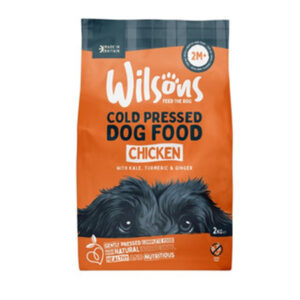
At Newcastle Pets, we stock the Wilsons cold pressed dog food range, handmade in Scotland using high-quality natural ingredients. Available in adult and puppy recipes, it’s one of the UK’s most trusted cold pressed brands.
How Is Cold Pressed Dog Food Made?
The cold pressing process is straightforward but quite different from how most dry dog food is produced. Here’s how it works:
- Ingredients are prepared. High-quality meat, vegetables, and other natural ingredients are ground and mixed together.
- The mix is pressed at low heat. Instead of using steam or high-temperature extrusion, the mixture is pressed through a roller or die at low temperatures (usually 40°C–80°C) for just a few seconds.
- The pellets are cooled and dried. The resulting pellets are then cooled, which helps them hold their shape without the need for artificial binders or preservatives.
Because the food is never exposed to the high temperatures used in traditional kibble production (often 120°C–140°C), the natural nutrients, oils, enzymes, and aromas in the ingredients are far better preserved. Wilsons, for example, presses each pellet at low temperatures specifically to retain the natural nutrient content of their ingredients, without baking the goodness out of them.
Cold Pressed Dog Food vs Kibble: What’s the Difference?
This is the question most dog owners ask first, and it’s a good one. Traditional extruded kibble has been the standard for decades, but cold pressed dry dog food works quite differently. Here are the key distinctions:
- Cooking temperature. Traditional kibble is produced using extrusion at around 120°C–140°C, which uses steam to bind and cook the ingredients. Cold pressed food uses temperatures of 40°C–80°C with no steam, preserving more of the natural goodness.
- Nutrient retention. High heat breaks down heat-sensitive vitamins, natural oils, and enzymes. Cold pressed food retains more of these nutrients naturally, without the need to spray artificial vitamins back on afterwards (which is standard practice in extruded kibble production).
- Digestion. Cold pressed pellets dissolve from the outside in, breaking down quickly and gently in your dog’s stomach. Traditional kibble can swell when it comes into contact with stomach fluids, which may cause discomfort in some dogs, particularly larger breeds.
- Texture. Extruded kibble is typically hard and crunchy, which does help to reduce plaque build-up on teeth. Cold pressed pellets are softer, making them easier to chew – particularly good for puppies and older dogs.
- Ingredients. Cold pressed recipes tend to use a higher proportion of quality meat and fewer fillers. Wilsons’ cold pressed chicken recipe, for example, contains 29% ground dried chicken alongside sweet potato, peas, kale, carrot, apple, and seaweed – with no artificial additives.
What Are the Benefits of Cold Pressed Dog Food?
Cold pressed dog food offers a range of benefits that make it a popular choice among health-conscious dog owners in the UK. Here are the main ones:
Better Nutrient Retention
Because the ingredients are never exposed to extreme heat, more of the natural vitamins, minerals, omega oils, and beneficial enzymes are preserved in the final pellet. These nutrients support everything from coat health and immune function to joint mobility and gut health. In high-heat production, many of these nutrients are lost and have to be supplemented artificially afterwards.
Easier to Digest
Cold pressed pellets are particularly gentle on the digestive system. They break down quickly and evenly in your dog’s stomach, releasing nutrients steadily rather than sitting heavily. This makes cold pressed food an excellent choice for dogs with sensitive tummies or those prone to digestive upsets. The Wilsons cold pressed salmon recipe is particularly popular with owners of dogs who struggle with chicken-based foods.
May Help Reduce the Risk of Bloat
One notable advantage of cold pressed food is that the pellets don’t swell significantly when they reach the stomach, unlike some extruded dry foods. For larger breeds that are more prone to bloat (gastric dilation-volvulus), this is worth considering. Cold pressed pellets dissolve from the outside in, which is a gentler process for the digestive system.
More Natural Aromas and Flavours
Lower cooking temperatures help to preserve the natural aromas and flavours of the meat and other ingredients. This makes cold pressed food more palatable, particularly useful for fussy eaters who turn their nose up at standard kibble.
High-Quality, Natural Ingredients
Cold pressed recipes typically use a higher meat content and fewer artificial additives than extruded foods. Wilsons cold pressed food is handmade in Scotland using natural ingredients and is available in nine allergy-friendly recipes, including grain free options. The packaging is also fully recyclable.
Is Cold Pressed Dog Food Good for Puppies?
Yes, and it’s actually one of the best options for young dogs. Cold pressed food is softer than traditional kibble, making it much easier for puppies to chew. The nutrient-dense pellets support the rapid growth and development that happens in a puppy’s first months. Because the natural vitamins and minerals are preserved through gentle processing, puppies get more out of every mouthful.
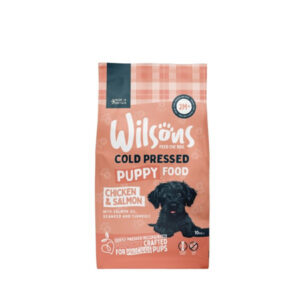
Wilsons’ cold pressed chicken and salmon puppy food is specially formulated for growing dogs and is suitable from just 2 months of age. It’s a complete dog food, meeting all the nutritional requirements set out by the Pet Food Manufacturers’ Association (PFMA) for puppies. The softer pellet also makes it easy to add a little warm water to create a paste, helpful for very young pups or those transitioning from wet food.
Can I Mix Cold Pressed Dog Food with Raw Food?
Yes, and this is one of the advantages cold pressed food has over traditional kibble. Cold pressed pellets digest at a similar rate to raw food, which means they can be fed alongside a raw diet without causing digestive conflicts. This is particularly useful for owners who want to supplement a raw diet with the convenience and nutritional completeness of a dry food, or for those who feed raw at home but need a portable option for travel or days out.
Traditional extruded kibble, by contrast, digests more slowly and can cause issues when mixed with raw food. If you’re currently feeding raw and want to introduce a dry food element, cold pressed is the right choice. You can browse Newcastle Pets’ full dog food range to find the right combination for your dog.
Is Cold Pressed Dog Food Good for Sensitive Stomachs?
Cold pressed food is one of the most recommended options for dogs with sensitive digestive systems. The gentle processing keeps the natural fibre, digestive enzymes, and prebiotic ingredients intact, which supports gut health. The pellets are also free from the artificial binders, flavour enhancers, and preservatives that can trigger sensitivities in some dogs.
Wilsons’ recipes include ingredients like chicory (a natural source of inulin, which feeds beneficial gut bacteria), seaweed, and postbiotic yeasts, all of which support a healthy digestive system. If your dog has a sensitive tummy, the Wilsons cold pressed lamb recipe is a good option, as lamb is a novel protein that’s less likely to trigger sensitivities than chicken.
How Do I Switch My Dog to Cold Pressed Food?
As with any dietary change, it’s best to transition gradually over a period of around two weeks. Start by replacing a small portion of your dog’s current food with the cold pressed food, and increase the proportion slowly each day until the switch is complete. This gives your dog’s digestive system time to adjust and reduces the likelihood of any upset.
If you’re transitioning from a raw diet, the process is typically smoother, as cold pressed food is digested at a similar rate. Keep an eye on your dog’s stools during the transition, they should remain firm and consistent. If you notice any loose stools or changes in appetite, simply slow the transition down. Most dogs adjust within a week or two and tend to take well to the natural flavours of cold pressed food.
For feeding quantities, always follow the guidelines on the packaging, as these are based on your dog’s weight and life stage. Wilsons cold pressed food is nutritionally dense, so you typically feed slightly less than you would with standard kibble.
How Should I Store Cold Pressed Dog Food?
Cold pressed dog food doesn’t require refrigeration and can be stored in the same way as traditional dry food. Keep the bag in a cool, dry place, away from direct sunlight. Once opened, aim to use the food within four months. Cold pressed food tends to have a slightly shorter shelf life than extruded kibble (typically around nine to twelve months unopened), because it contains fewer artificial preservatives. Natural antioxidants such as rosemary and tocopherol extracts are used instead.
Frequently Asked Questions
Is cold pressed dog food better than kibble?
In terms of nutrient retention and digestibility, cold pressed food generally has an advantage over traditional extruded kibble. The lower cooking temperature preserves more natural vitamins, minerals, and oils, and the pellets are easier for most dogs to digest. That said, the most important factor is always the quality of the ingredients. A cold pressed food made with high-quality meat and natural ingredients will be significantly better than a budget extruded kibble, and vice versa.
Is cold pressed dog food more expensive?
Cold pressed food does tend to carry a slightly higher price tag than budget dry foods, which reflects the quality of ingredients used and the more careful production process. However, because the food is nutritionally dense, you typically need to feed a smaller portion per meal, which helps to offset the cost. Wilsons cold pressed food is available at Newcastle Pets in 2kg and 10kg bags, making it straightforward to manage the cost whether you have a small or large dog.
Can all dogs eat cold pressed food?
Cold pressed food is suitable for dogs of all ages and breeds, from 2 months upwards. It’s particularly well-suited to puppies, senior dogs, and those with sensitive stomachs. Always consult your vet before making a dietary change if your dog has a specific health condition, such as kidney disease or pancreatitis, as some conditions require specialised nutritional management.
Explore Wilsons Cold Pressed Dog Food at Newcastle Pets
We stock the full Wilsons cold pressed range at Newcastle Pets, including recipes for adult dogs and puppies. Whether you’re looking for chicken, lamb, salmon, or a puppy formula, you’ll find it in our cold pressed dog food section. If you’d like any advice on which recipe is right for your dog, don’t hesitate to get in touch, we’re always happy to help.