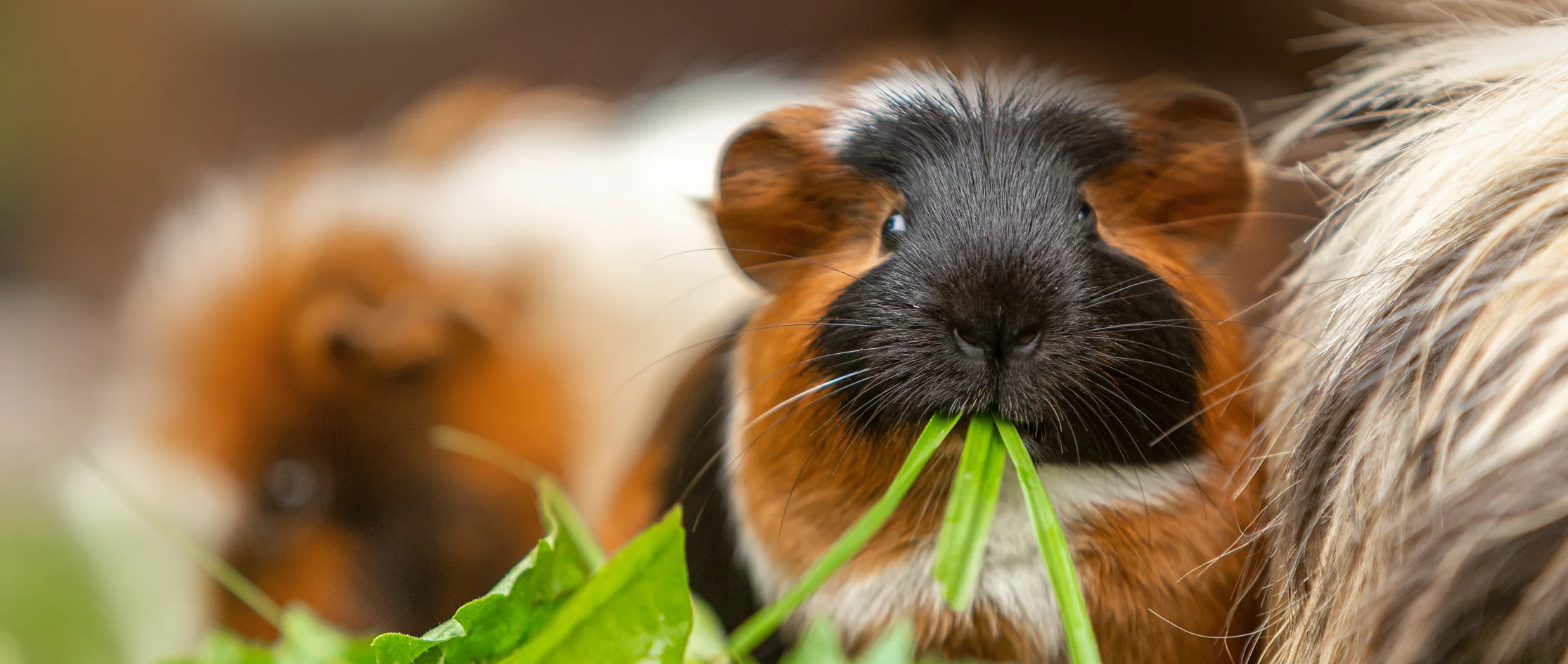
If you have just brought a guinea pig home, or you are thinking about getting one, one of the first things you want to know is what on earth they are supposed to eat. Guinea pigs look simple enough, but their dietary needs are actually quite specific. Get it right and you will have a happy, healthy pet who thrives. Get it wrong and it can lead to some serious health issues very quickly.
The good news is that feeding guinea pigs well is not complicated once you understand the basics. This guide walks you through everything: what they need every day, which foods to avoid, how much to give them, and a few common mistakes that are easy to make without realising.
The Quick Answer: What Do Guinea Pigs Eat?
Guinea pigs eat a diet based primarily on hay, supplemented with fresh vegetables, a small amount of guinea pig pellets, and constant access to fresh water. Hay should make up around 85 to 90% of their daily intake. Everything else plays a supporting role. This mirrors the diet they would eat in the wild, where they graze on grasses and fibrous plant material throughout the day.
Hay: The Most Important Food in Your Guinea Pig’s Diet
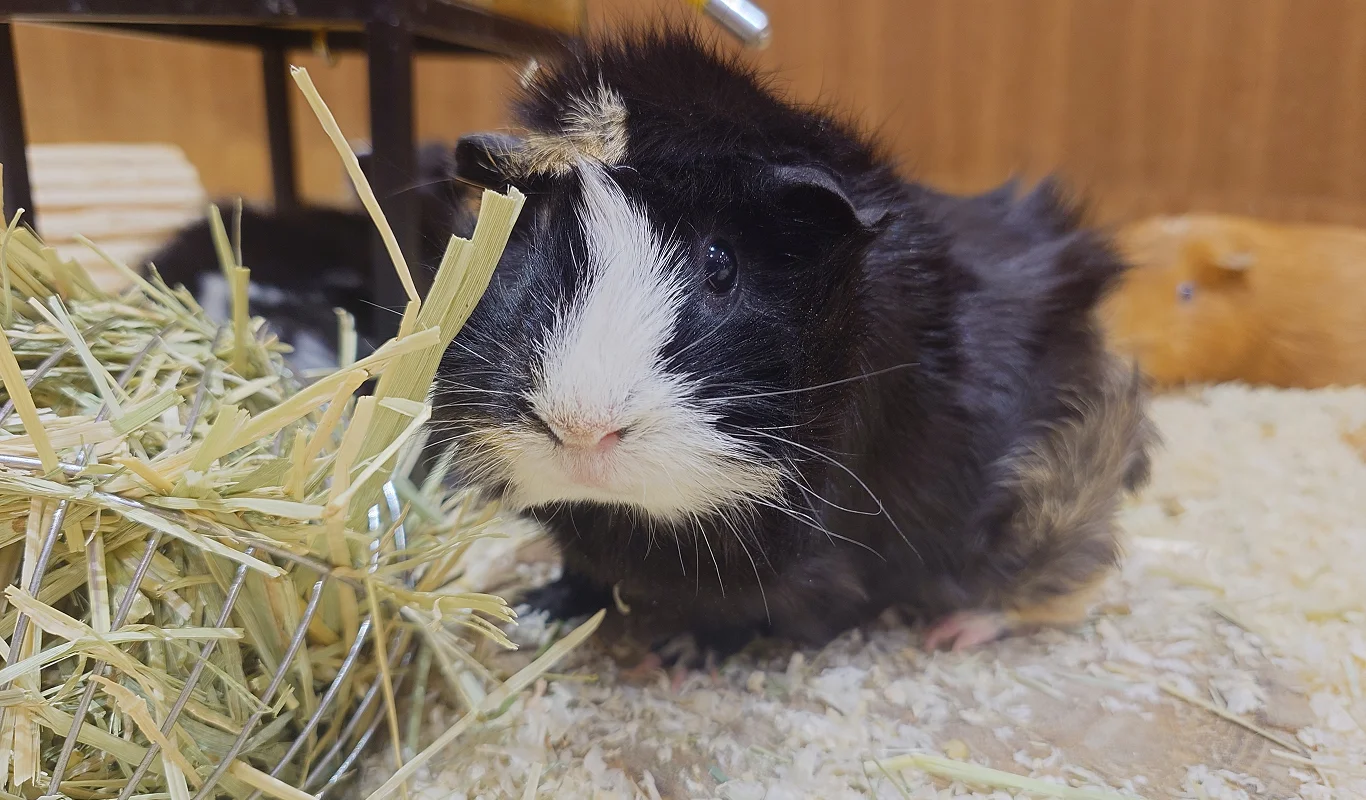
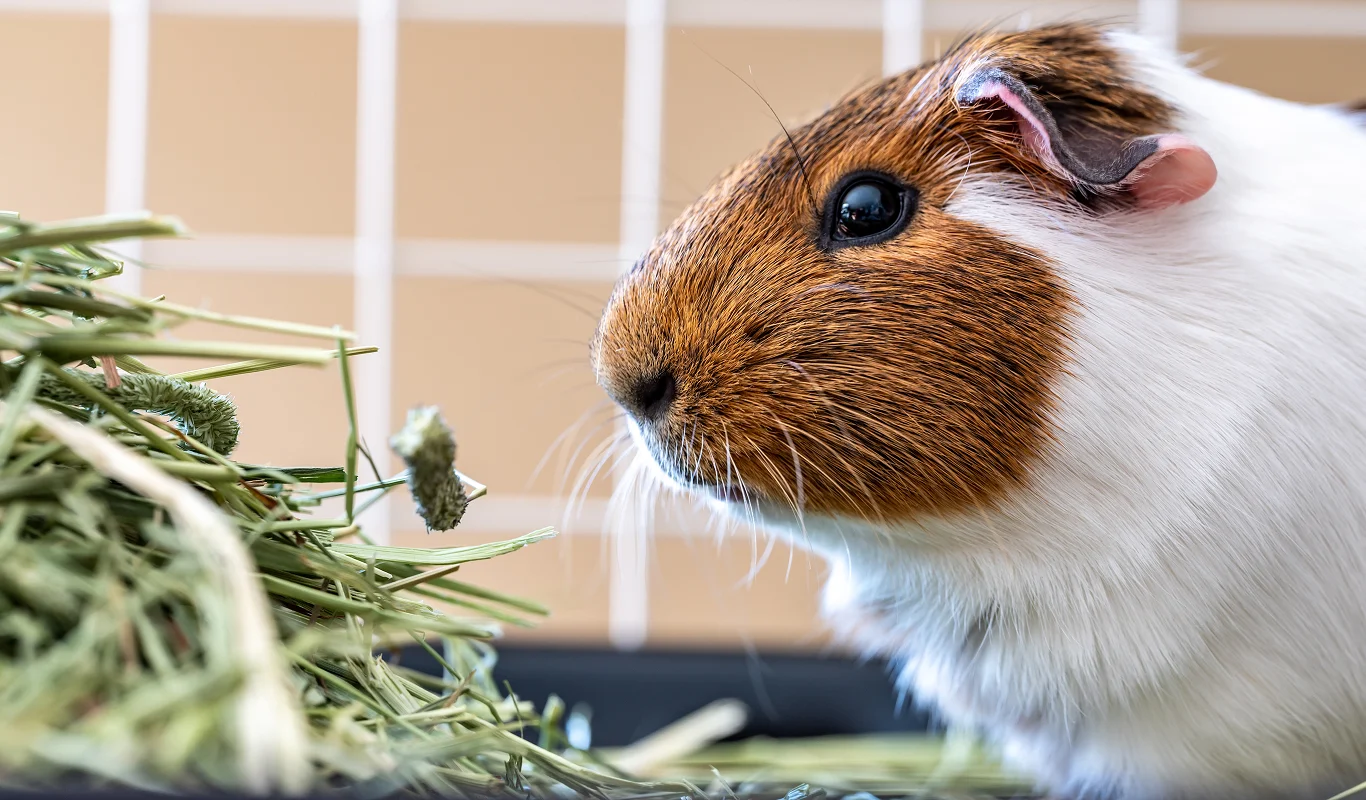
Hay is not optional. It is the foundation of everything. Guinea pigs need unlimited access to fresh hay at all times, and it should make up the vast majority of what they eat each day. The reasons for this go beyond simple nutrition.
Guinea pigs are hindgut fermenters, which means their digestive systems are built to process large amounts of fibre continuously. Without enough hay, their gut can slow down or stop, leading to a potentially life-threatening condition called gut stasis. Hay also keeps their ever-growing teeth worn down to the correct length. Without enough roughage to chew on, dental problems can develop quickly and become very serious.
The best types of hay for adult guinea pigs are:
- Timothy hay – the gold standard for adult guinea pigs. High in fibre, moderate in protein and calcium.
- Meadow hay – a good alternative with a good variety of grasses and plants.
- Rye hay – another suitable option for adult piggies.
Avoid alfafa hay for adult guinea pigs. It is high in calcium and can contribute to bladder stones or kidney problems over time. Alfafa is better suited to young guinea pigs under six months or pregnant and nursing sows, who need the extra calcium. Also avoid giving hay clippings from a lawnmower as these can ferment quickly and make your guinea pig seriously ill.
As a rough guide, aim to provide each guinea pig with at least their own body size in hay every single day. When in doubt, give more. You cannot overfeed hay.
- Country Value Rabbit Nuggets 1.5kg
- Foods - Small Animal - Rabbit
Fresh Vegetables: Essential for Vitamin C
Guinea pigs cannot produce their own vitamin C, just like humans. This is a crucial detail that many new owners are not aware of. Without a daily source of vitamin C, guinea pigs develop scurvy, a condition that causes joint pain, lethargy, loss of appetite, and eventually becomes very serious.
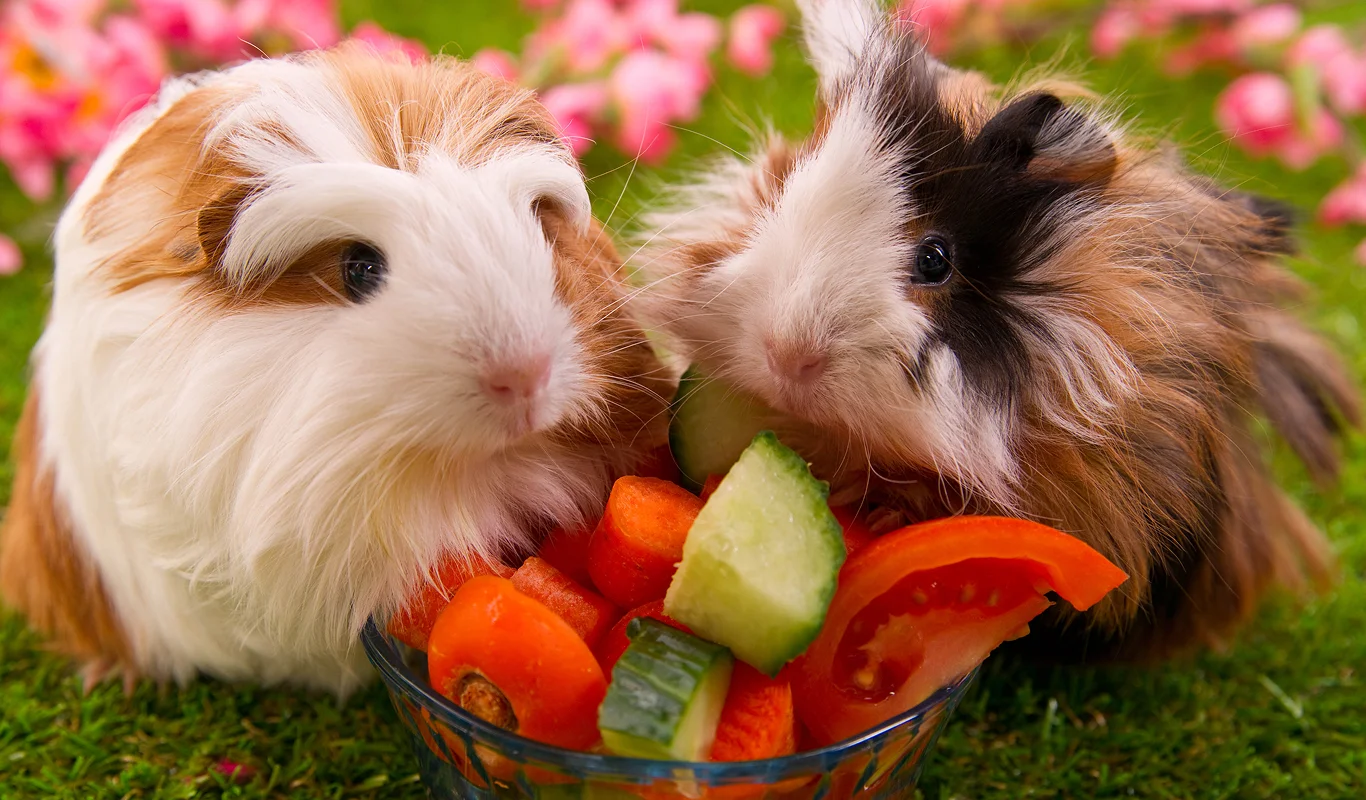
Fresh vegetables are one of the best ways to provide this. Each guinea pig needs around one cup of fresh vegetables and leafy greens per day. Variety is important, not just for nutrition but to keep them interested in their food. Rotating what you offer each day keeps mealtimes enriching.
Safe and nutritious vegetables for guinea pigs include:
- Bell peppers – particularly red and orange peppers, which are excellent sources of vitamin C. One of the best choices you can make.
- Romaine lettuce and other dark leafy greens – good everyday staples.
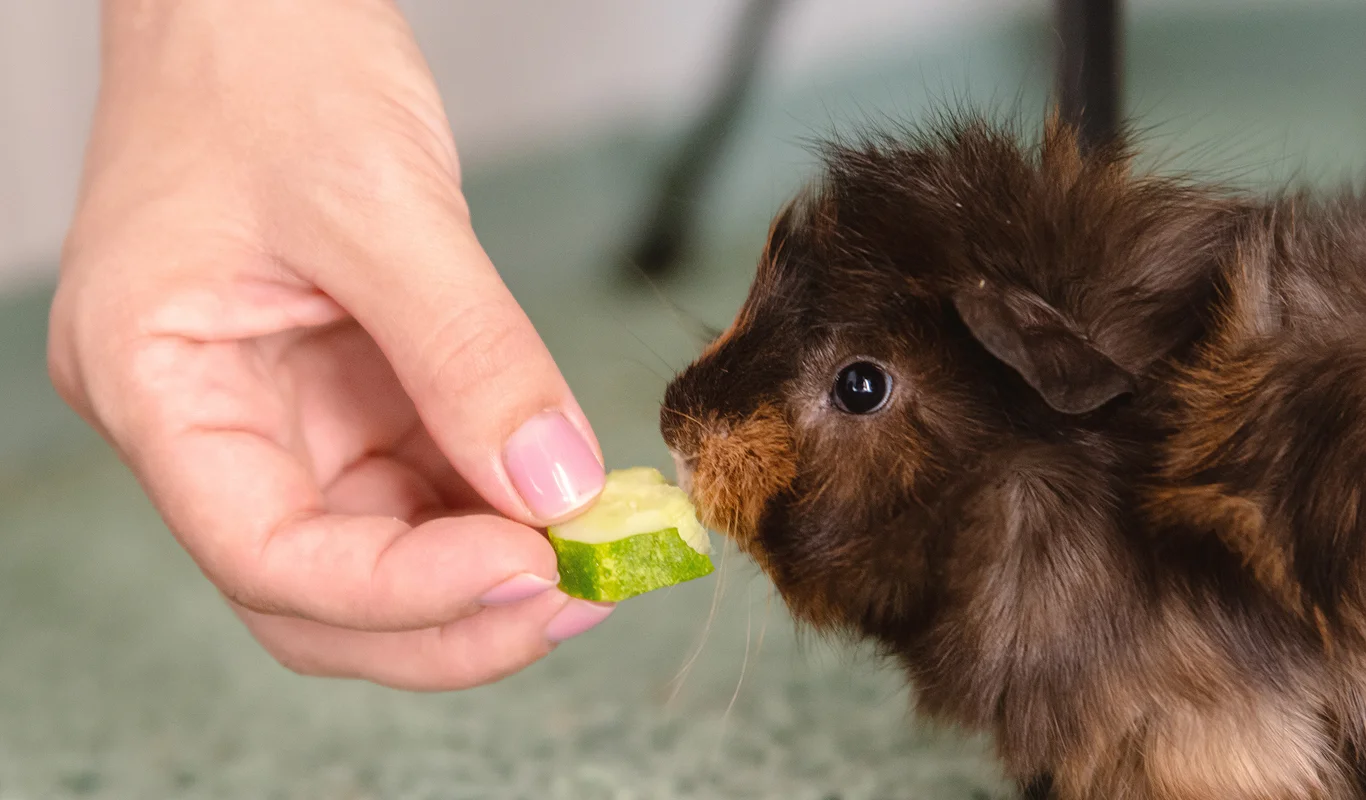
- Cucumber – hydrating and well tolerated. Feed flesh, skin, and seeds in moderation.
- Courgette – gentle on the digestive system and popular with most piggies.
- Kale – high in vitamin C but also high in calcium, so offer it a few times a week rather than every day.
- Spinach – nutritious but high in oxalates, so keep it occasional.
- Fresh herbs – basil, coriander, dill, mint, parsley, and flat-leaf parsley are all popular and nutritious. A great way to add variety.
Feed vegetables that need to be limited more carefully:
- Carrots – loved by guinea pigs but high in sugar. Offer a few times per week as a treat rather than a daily staple.
- Broccoli and cabbage – nutritious but can cause gas and bloating if fed too often. A small amount a couple of times a week is fine.
- Cauliflower – similar to broccoli. Feed occasionally.
Always wash vegetables thoroughly before feeding. Remove any uneaten fresh food after a few hours to prevent it from going off in the enclosure.
Guinea Pig Pellets: A Helpful Supplement
Pellets are not the main event, but they do play a useful supporting role. They are formulated to provide nutrients that guinea pigs may not get in sufficient quantities from hay and veg alone, including a stabilised source of vitamin C.
The recommended amount is one level tablespoon of pellets per guinea pig per day. No more than this. Overfeeding pellets can cause obesity and dental problems, and it can reduce how much hay your guinea pig eats, which is the opposite of what you want.
When choosing pellets, look for:
- Grass-based nuggets specifically formulated for guinea pigs
- A consistent shape and colour (a uniform nugget rather than a mixed muesli style)
- Added vitamin C clearly listed on the label
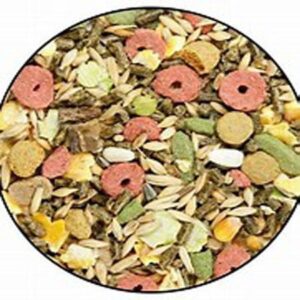
Avoid muesli-style mixes at all costs. Guinea pigs tend to eat the sugary, starchy bits they enjoy and leave the rest. This leads to nutritional deficiencies, selective feeding habits, and dental disease.
Store pellets in a cool, dry, dark place and use them within three months of opening. The vitamin C inside the pellets breaks down over time, especially when exposed to heat or light. A fresh portion every day is important.
You can browse our range of guinea pig food and treats at Newcastle Pets, where we stock quality pellets and grass-based diets suited to guinea pigs at every life stage.
Fresh Water: Always Available
Guinea pigs must have access to fresh, clean water at all times. Check their water supply twice daily and replace it every day. In winter, make sure it does not freeze. Dehydration in guinea pigs can happen quickly and lead to serious illness.
A proper water bottle attached to the side of the hutch or cage is a practical choice, as it keeps the water clean and prevents spillage. Clean the bottle regularly to prevent bacterial build-up in the spout.
Can Guinea Pigs Eat Fruit?
Guinea pigs can eat fruit, but only in small amounts as an occasional treat. Fruit is high in natural sugar, which can cause digestive upsets, obesity, and dental problems if fed regularly. A small piece of apple (without seeds), a couple of blueberries, or a thin slice of strawberry once or twice a week is plenty.
Avoid citrus fruits such as oranges and lemons. The high acid content can irritate their mouths and digestive systems.
Foods Guinea Pigs Should Never Eat
Some foods that seem perfectly harmless to us can be dangerous or even fatal for guinea pigs. Here is a list of foods to avoid completely:
- Potatoes and potato skin – toxic to guinea pigs
- Onions, garlic, and leeks – can cause blood disorders
- Mushrooms – toxic
- Rhubarb – highly toxic
- Avocado – toxic
- Lawnmower grass clippings – these ferment rapidly and can cause fatal bloat
- Buttercups and daffodils – toxic wild plants to watch for if you let them graze outdoors
- Chocolate and dairy products – cannot be processed by their digestive system
- Rabbit food – does not contain sufficient vitamin C for guinea pigs and could contribute to scurvy if used as a substitute
A Simple Daily Feeding Routine
If you are new to guinea pig ownership, a consistent routine makes life easier and helps your guinea pigs feel secure. Here is a simple daily plan to follow:
- Morning: Top up hay (make sure it is always freely available). Give one tablespoon of fresh pellets per guinea pig. Offer a selection of fresh vegetables and leafy greens. Check and refill water.
- Evening: Remove any leftover fresh vegetables that have been sitting for several hours. Offer another small portion of fresh veg if you wish. Check hay and water levels again.
Guinea pigs graze throughout the day, so they will nibble on hay continuously between your feeding sessions. This is completely normal and a sign of a healthy digestive system.
Common Guinea Pig Feeding Mistakes to Avoid
Even well-meaning owners can fall into a few common traps. Here are the ones we see most often:
- Not providing enough hay. This is the most common mistake. Hay must be available at all times, not just as bedding.
- Using rabbit food instead of guinea pig pellets. Rabbit food does not contain the vitamin C that guinea pigs need. It can lead to scurvy over time.
- Feeding too much fruit. Even natural sugar can cause problems if given daily.
- Topping up pellets without replacing them. Pellets should be given fresh every day, not just topped up in the bowl.
- Changing diet too quickly. Any changes to your guinea pig’s diet should be introduced gradually over two to four weeks. A sudden switch can cause serious digestive upset.
Setting Up the Right Space for Your Guinea Pig
Good nutrition works hand in hand with the right living environment. Guinea pigs are social animals who need space to move around and forage. Explore our guinea pig hutches and runs for indoor and outdoor options, and our guinea pig accessories for feeding bowls, water bottles, and enrichment items that support a healthy routine.
You can also find everything you need from our full rabbits and guinea pigs section.
Frequently Asked Questions About Guinea Pig Feeding
How much should a guinea pig eat per day?
Guinea pigs should have unlimited hay at all times, one cup of fresh vegetables per guinea pig per day, and one tablespoon of guinea pig pellets. Fresh water should always be available. These amounts provide the right balance of fibre, vitamin C, and essential nutrients for a healthy adult guinea pig.
What vegetables are best for guinea pigs?
Bell peppers (particularly red and orange) are excellent for their high vitamin C content. Dark leafy greens such as romaine lettuce, kale, and fresh herbs are also very good choices. Offer variety each day and rotate what you give them to cover a wider range of nutrients.
Can guinea pigs eat cucumber?
Yes. Cucumber is safe for guinea pigs and they tend to enjoy it. It is hydrating and gentle on their digestive system. Feed the flesh, seeds, and skin in moderation as part of their daily vegetable portion.
Do guinea pigs need vitamin C supplements?
Most guinea pigs get enough vitamin C from a good diet of fresh vegetables and vitamin C-fortified pellets. If your guinea pig is unwell or not eating enough veg, speak to your vet about whether a supplement is needed. Avoid adding vitamin C to their water bottle as it degrades quickly once dissolved.
How often should I clean my guinea pig’s food bowl?
Pellet bowls should be cleaned at least once a week, or more often if food becomes damp or dirty. Remove uneaten fresh vegetables after a few hours to prevent them from rotting. Water bottles should be rinsed daily and given a thorough clean several times per week.